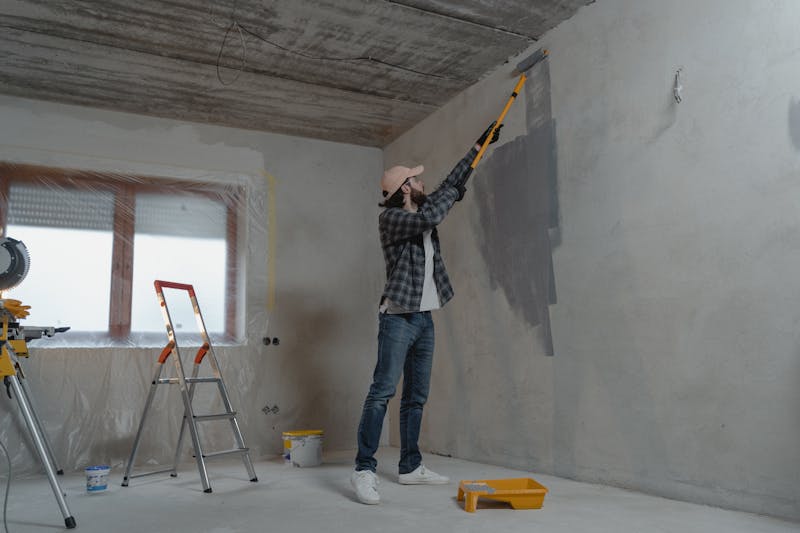
How to prepare walls before painting
Why preparation matters so much
Paint applied to a poorly prepared surface will last far less time and show visible defects such as bubbling, peeling and staining. At RS Pintura we know that the secret to a perfect finish lies in the preparation. Investing time in this initial phase is what separates a professional result from an amateur one.
Cleaning and repairing imperfections
The first step is to clean the wall of dust, grease and accumulated dirt. Then cracks, holes and irregularities must be repaired with filler or patching compound. Once dry, the surface is sanded to smooth the edges and create a uniform base. In older properties in the Madrid and Villanueva del Pardillo area it is common to find walls with multiple layers of old paint that should be addressed before applying the new coat.
Sanding and sealing the surface
Sanding is key to ensuring the paint adheres correctly. RS Pintura uses dustless sanding systems that minimise disruption for the occupants during the work. After sanding, a sealer or primer is applied to even out the wall's absorption and guarantee uniform coverage with fewer coats of paint.
Protecting what will not be painted
Before starting with the paint, cover the floor with plastic sheeting or protective paper and apply masking tape to skirting boards, door frames and sockets. This protection prevents stains and ensures a clean, precise finish. Careful preparation is the foundation of the professional work we deliver on every project.